
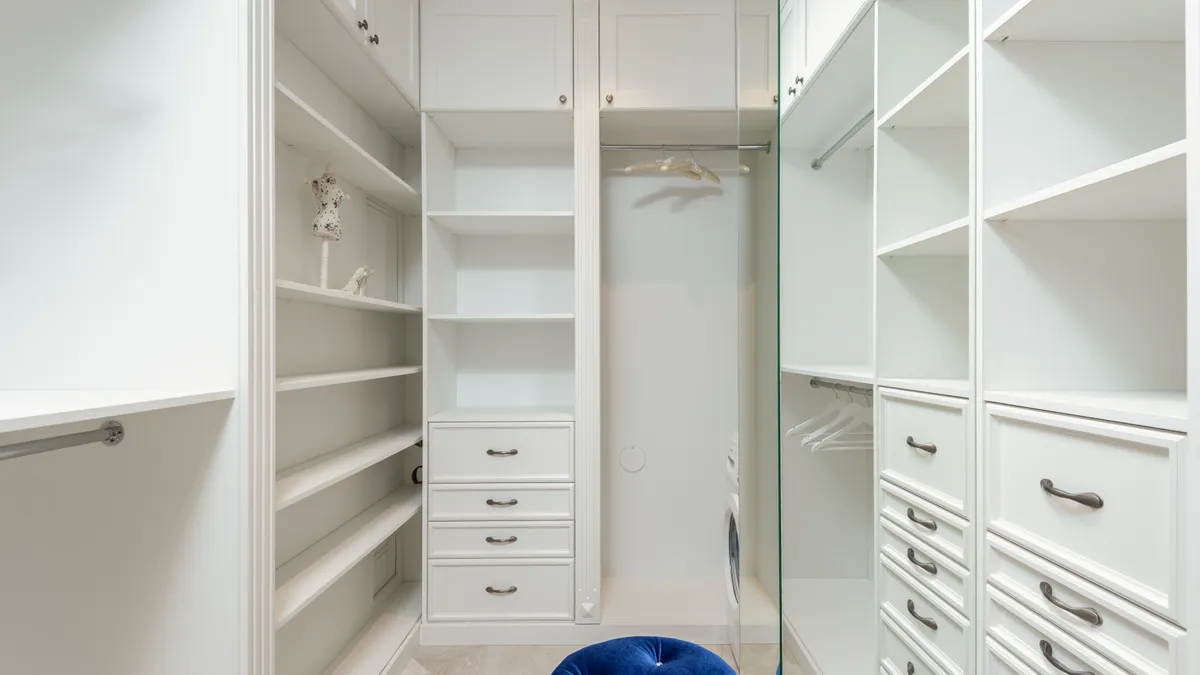
Last updated: October 30, 2026
Quick answer: organize a small closet without adding more furniture by clearing it out, setting zones, and using the closet’s own height, rod space, and shelf surfaces first. How to Organize a Small Closet Without Adding More Furniture works best when each item has one job, one place, and one way in and out.
Key Takeaways
- Divide the closet into zones before you assign space.
- Use vertical storage, limit rod crowding, and keep only weekly clothes inside.
- Give each zone one purpose and one boundary.
- Treat the rod as limited space, not a catchall.
Start with what the small closet already gives you
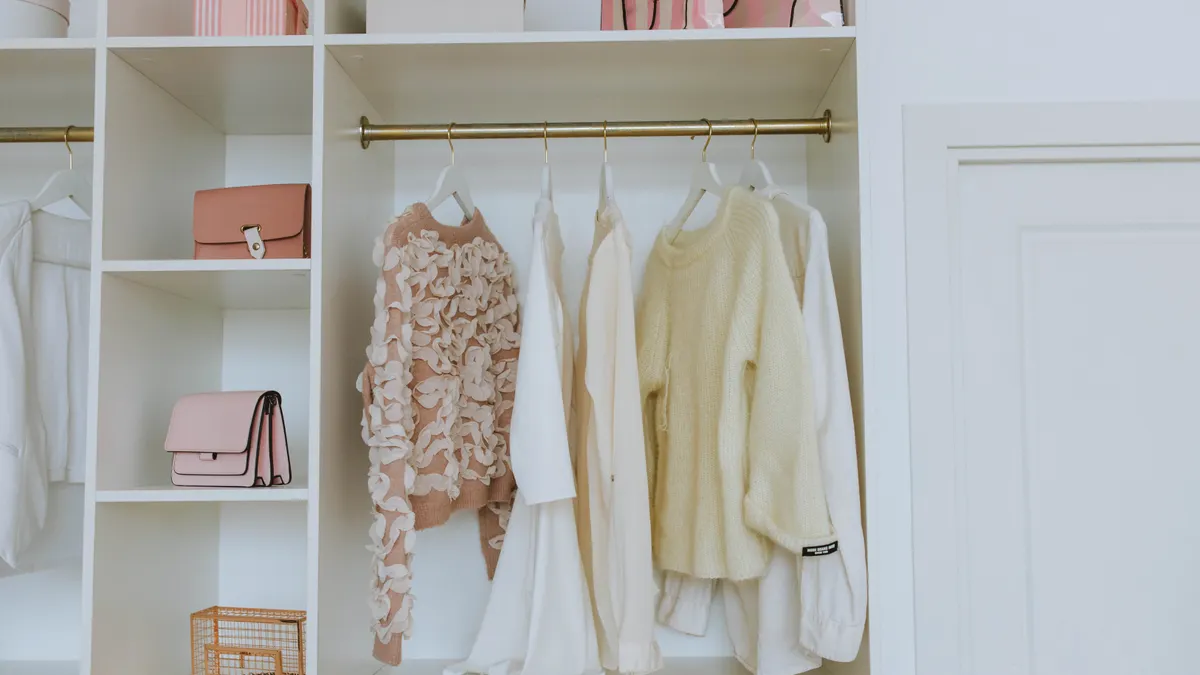
A small closet usually organizes best when you stop treating every inch as equal and divide it into zones first, but if the layout is unusually awkward, consider consulting a professional organizer or designer. Before you move a single hanger, measure the closet’s usable width, depth, and height with a tape measure, then note where the closet rods, top shelf, and floor actually leave open space. That gives you the layout you are working with, not the layout you wish you had.
Then empty the closet completely. Put clothes on the bed or a clean floor in three groups: keep, donate, and relocate. If you skip this, you end up reorganizing clutter instead of organizing storage. A small closet cannot carry dead weight.
In short: the first win is not a product, it is a clean slate. Once the closet is empty, you can see whether the real problem is hanging space, folded space, or accessory overflow.
Now decide what belongs in the closet at all. Daily wear, work clothes, and true seasonal staples belong here. Bulky luggage, rarely used keepsakes, and extra linens do not. A closet that is forced to hold everything becomes a storage closet, not a clothing closet.
This is the point where the page links up to the larger home organization systems hub: the closet works better when it fits into the rest of the home’s storage plan, not when it tries to solve every room’s problem on its own. For related closet storage ideas, see the home organization systems hub and the closet planning guide.
How do I maximize a small closet?
You maximize a small closet by using vertical storage, reducing rod crowding, and keeping only the clothes that need to live there every week, though a professional organizer can help if the layout is unusually complex. Start with the upper shelf, the hanging rod, and the floor, because those are the three surfaces that usually waste the most space.
Put the tallest, least-accessed items highest up. The top shelf should hold lightweight bins, vacuum storage bags, or labeled containers for off-season pieces. Vacuum storage bags are useful for puffy coats, heavy sweaters, or guest bedding because they flatten soft volume, but they are not ideal for items you reach for often. The trade-off is simple: they save space, but they add a step every time you want something back.
Use the closet rod for the clothes that wrinkle easily or that you wear most often, and check with a professional organizer if you are unsure how much your rod can safely carry. Group items by length, not just by type. Short items, such as shirts and folded pants on hangers, leave room underneath for a second rod or a narrow stack of bins if the closet allows it. Long items, such as dresses and coats, need the full drop. If you hang everything in one loose block, the rod fills up fast and the floor disappears.
Shelf dividers help when folded stacks keep slumping sideways. They are especially useful on a shelf that is wider than your folded items are tall. The divider creates a fixed lane so sweaters, jeans, or tees do not drift into one pile. The downside is that dividers can become one more thing to work around if the shelf is already too shallow.
Keep the floor almost empty. One lidded bin or a single pair of shoes is fine; a row of random baskets is not. A clear floor makes the closet easier to use and easier to clean in under 5 minutes.
Build clothing zones so the closet stays usable
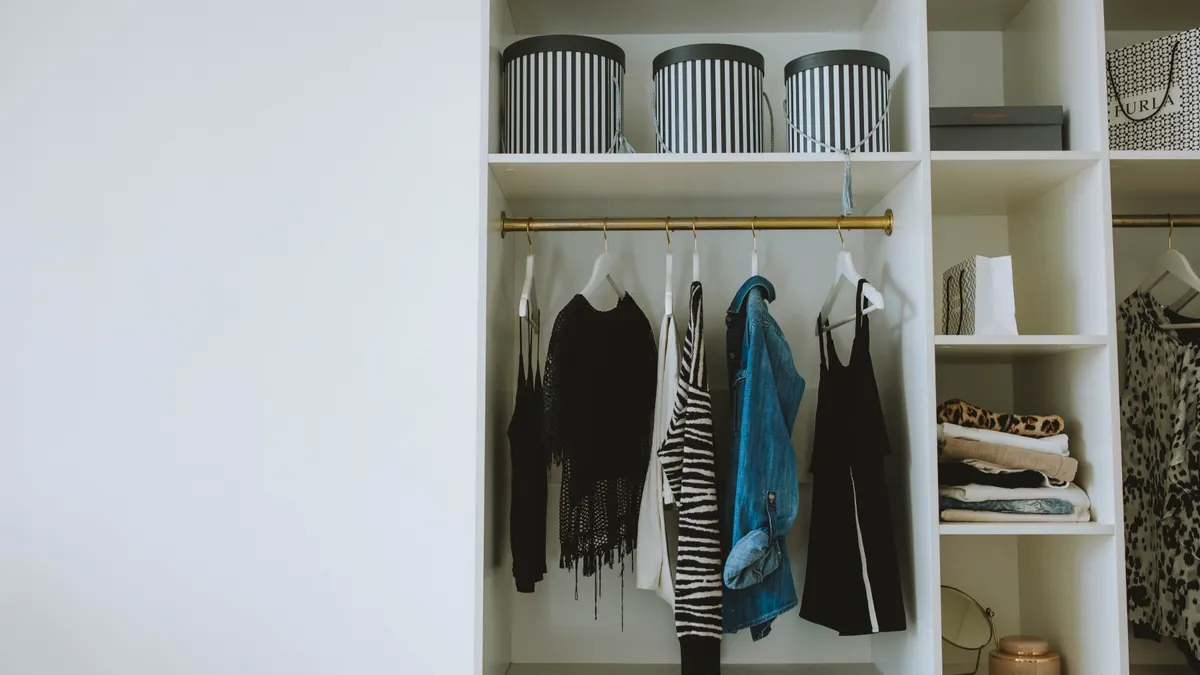
A small closet stays organized when each zone has one purpose and one boundary. Set up three zones in this order: daily use, occasional use, and out-of-season storage.
Daily use goes at eye level and at the easiest reach on the rod. This is where your most worn shirts, pants, work tops, and current shoes belong. If you have to stretch, crouch, or move something else to get to them, the zone is too hard to use.
Occasional use belongs higher or lower. This zone is for event clothing, backup layers, gym gear, or items you do not wear every week. Put these in bins or on the upper shelf so they do not compete with daily clothes. A clear bin works well if you want fast visual checks; an opaque bin works better if the contents are visually noisy and you do not want the shelf to look crowded.
Out-of-season storage belongs in the least convenient spot, because you should not be reaching for it constantly. This is where vacuum storage bags can help, especially for winter sweaters in a warm climate or summer clothing during cold months. Label the bag by category, not by vague description. “Wool sweaters, size M” is useful. “Winter stuff” is not.
The mistake here is mixing zones by emotion instead of frequency. People often keep special pieces in the front because they love them, then hide the clothes they actually wear. That makes the closet feel full even when the math says it is not. If a piece is special but rarely worn, it does not earn premium real estate.
A closet zone also needs a return path. If something comes out for laundry, ironing, or storage, it should know where it goes back. Without that, the system breaks in 2 days. For more planning help, the closet mapping guide and seasonal storage guide can keep the system consistent.
Use hanging space without overcrowding the rod
A small closet works better when the rod is treated as limited real estate, not a catchall, but if you are not sure how much spacing your closet needs, consult a professional organizer. Keep enough space between hangers that you can slide items apart with one hand. If every hanger is packed shoulder to shoulder, the closet can hold more clothes for a day, but it becomes harder to see, harder to choose from, and more likely to wrinkle.
Use the right hanger for the garment. Thin matching hangers save visual space and keep the rod from looking like a tangle. Thick, mixed hangers waste room and create uneven spacing. If a hanger bends or leaves a shoulder bump, replace it. That is not a luxury upgrade; it is part of making the rod usable.
Try a two-level hanging setup only if the closet height supports it. A short top section can hold shirts or folded pants on hangers, while the lower section holds skirts, jackets, or folded-over pieces. This works best in closets with enough vertical room to keep the lower items off the floor and visible at a glance. If the top section gets too low, you create a cramped stack that is harder to use than a single rod.
Do not overfill the rod with long items that drag the bottom of the closet. Long coats, maxi dresses, and long hems need space below them. If those pieces are the majority of what you own, the small closet is not wrong; the hanging strategy is.
The cost of overcrowding is hidden but real. Clothes crease faster, matching takes longer, and you stop putting items back neatly because there is nowhere neat to put them. If you want a rod that stays organized, leave a little air between categories. A hanging space guide can help you compare short-item and long-item layouts.
Fold the rest so stacks do not collapse
Folded clothes stay organized in a small closet when the stacks are shallow, uniform, and easy to refill. One deep pile of T-shirts looks tidy for a week and then slides into a mess. Two shorter stacks are more stable than one tall one.
Use one folding method consistently so your items land at the same height. A standard retail-style fold or a file-fold approach both work; the key is choosing one and sticking to it for a category. Tees should match tees, sweaters should match sweaters, and jeans should match jeans. Mixed heights make a shelf harder to use because the stack front never lines up.
Put the heaviest folded items on the lower shelf and lighter items above them. Jeans, sweatpants, and thicker knits can handle the bottom. T-shirts, sleepwear, and light tops belong higher up. Shelf dividers are useful here because they keep each stack from leaning into the next one. Without dividers, a stack of 8 or 10 items can start to slouch into the neighboring pile and turn one shelf into a domino effect.
Limit each folded stack to what you can lift and replace with one hand. If a stack becomes so tall that it blocks the shelf above it or tips when you remove one item, it is too big. Split it.
This is one place where a small closet punishes perfectionism. A perfectly folded, overstuffed shelf is still clutter. A slightly less perfect shelf with room to breathe works better. If a piece wrinkles easily, hang it instead of forcing it into a folded stack just to make the shelf look uniform. The folding guide and shelf divider guide can keep stacks consistent.
Put accessories in the closet without stealing prime space
Accessory storage should use narrow, vertical, or contained spaces that do not block clothes. Belts, scarves, hats, ties, jewelry cases, and small bags can all live in the closet, but they need limits. If accessories spill across the floor or the top shelf, they take over the space meant for clothing.
Use bins for small loose items. A shallow bin on the top shelf is better than a deep bin on the floor because it keeps small things visible and prevents them from becoming a graveyard for random extras, but if the closet has unusual shelf depth, a storage professional can help you choose the safest option. One bin for belts and scarves, another for seasonal hats, and a third for travel items is usually enough. Label each bin plainly so you do not have to reopen three containers to find one item.
If the closet has a side wall or narrow gap, use that for slim accessory storage only if it does not intrude on hanging space. The goal is not to add more hardware; it is to claim dead space that is already there. A small gap can hold flat items. It cannot support bulky stacks without making the closet harder to use.
Shoes deserve their own boundary too. If you keep shoes in the closet, cap the number that can live there at once. One or two pairs on the floor is manageable. A loose row of boxes is not. Shoes that are out of season should move out with the rest of the seasonal group.
The main trade-off with accessory storage is convenience versus containment. Open storage is faster but looks messy sooner. Closed storage is neater but slower to access. A small closet usually does better with contained storage for the small stuff and open access for the clothes you wear most. The accessory storage guide can help you sort small items by size and frequency.
Seasonal rotation keeps the closet from filling up again
Seasonal rotation keeps a small closet from becoming permanently crowded. Move off-season clothes out in a planned batch instead of letting every season’s items compete for the same rod and shelf space.
Set a rotation date that matches your climate, not the calendar alone. In a warm area, you may switch sooner than a cold one. The point is to keep only the current season and a small overlap in the closet. If it is late October and the first cold layer appears, that is a natural time to move light summer pieces into vacuum storage bags and bring forward heavier layers.
Group the off-season items before you store them. Keep winter sweaters together, summer tees together, and event pieces together. That makes the next rotation faster because you are not sorting from scratch. A labeled vacuum storage bag or bin should tell you what is inside and the size or category. If a label needs decoding, it is not a good label.
This is also the moment to edit again. If you did not wear an item during the full season that just ended, consider whether it still belongs in the closet at all. A small closet cannot carry sentimental overflow forever.
The limit of seasonal rotation is that it only works if you actually move things out. Many people say they have a seasonal system, but the closet still holds four seasons at once. That is not rotation; that is accumulation with a calendar attached. The seasonal storage guide and decluttering checklist can make the swap easier.
Common mistakes that make a small closet feel smaller
The biggest mistake is keeping too many categories in the closet at once. That costs hanging room, shelf room, and visual clarity. Move non-clothing items elsewhere unless they truly need to live here.
The second mistake is using mismatched hangers and random bins. That costs vertical space because the rod becomes uneven and the shelves become visually cluttered. Use a consistent hanger style and a small number of bin sizes instead of many shapes that waste corners.
The third mistake is treating the closet like a long-term storage unit. That costs access. A small closet needs frequent pruning, because a drawerful of “maybe” items can steal the same room as clothes you wear every week.
The fourth mistake is overstuffing the top shelf. That costs safety and sanity. Heavy items should not be stacked high where they are hard to lift down. Keep the upper shelf for lighter, less-used things, and leave room to remove one item without pulling the whole pile apart.
The last mistake is organizing by category only and ignoring frequency. Shirts that you wear three times a week should not sit behind formalwear. The best small closet layout starts with habit, not sentiment.
If the closet still feels impossible after you remove extras, the problem may be volume, not organization. In that case, the honest answer is to pare down the clothing collection or move rarely used pieces elsewhere. A closet can be made more efficient, but it cannot become bigger without changing the room.
What should go in a small closet?
A small closet should hold the clothes and accessories you use most often, plus a limited amount of seasonal storage. Daily tops, pants, workwear, and one current-season layer belong there first. Add only a small number of shoes or accessories if they do not crowd the rod or shelf. A small closet works best when it stays selective, not comprehensive.
How do I store out-of-season clothes in a closet?
Store out-of-season clothes in vacuum storage bags or labeled bins on the top shelf or in the least convenient section of the closet. Keep the bag contents grouped by season and category, such as sweaters or summer tops, so rotation is fast later. The goal is to free rod space now and make the next swap simple.
Drafted with AI; not yet reviewed by a person.