
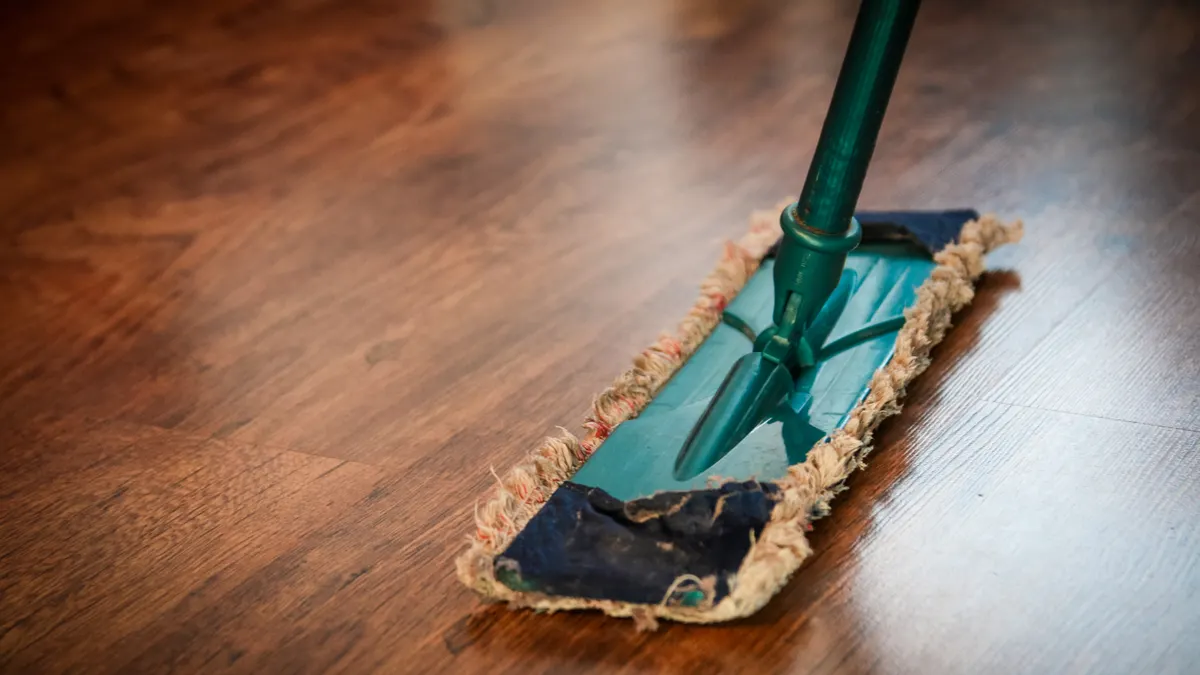
Last updated: October 30, 2026
Quick answer: clean hardwood floors without damaging the finish by dusting first, then using a lightly damp microfiber mop with a pH-neutral cleaner. The method works for most finished floors because the finish, not the wood itself, is the part you are trying to protect. If you want the shortest version of How to Clean Hardwood Floors Without Damaging the Finish, use dry cleaning first, then minimal moisture.
Key Takeaways
- Use a vacuum with a hardwood setting or soft brush, a microfiber mop, a bucket, finished-wood cleaner, and a dry cloth.
- Dust first, then mop with a barely damp head, and dry any water before it sits in seams.
- A pH-neutral cleaner labeled for hardwood or finished wood is a good regular-cleaning option.
- If water puddles, seeps into seams, or lingers for minutes, there is too much on the floor.
Hardwood floor care fails when the cleaning method adds too much water, grit, or alkaline residue. The safe approach is simple: remove loose dirt before it scratches, use the least moisture that still lifts soil, and stop before the finish looks wet. That rule matters whether the floor has a polyurethane finish, an oil-modified finish, or a site-applied coating, because all of them can haze, swell, or dull if they stay wet too long. According to the National Wood Flooring Association, hardwood maintenance should keep water use to a minimum.
What you need before you start
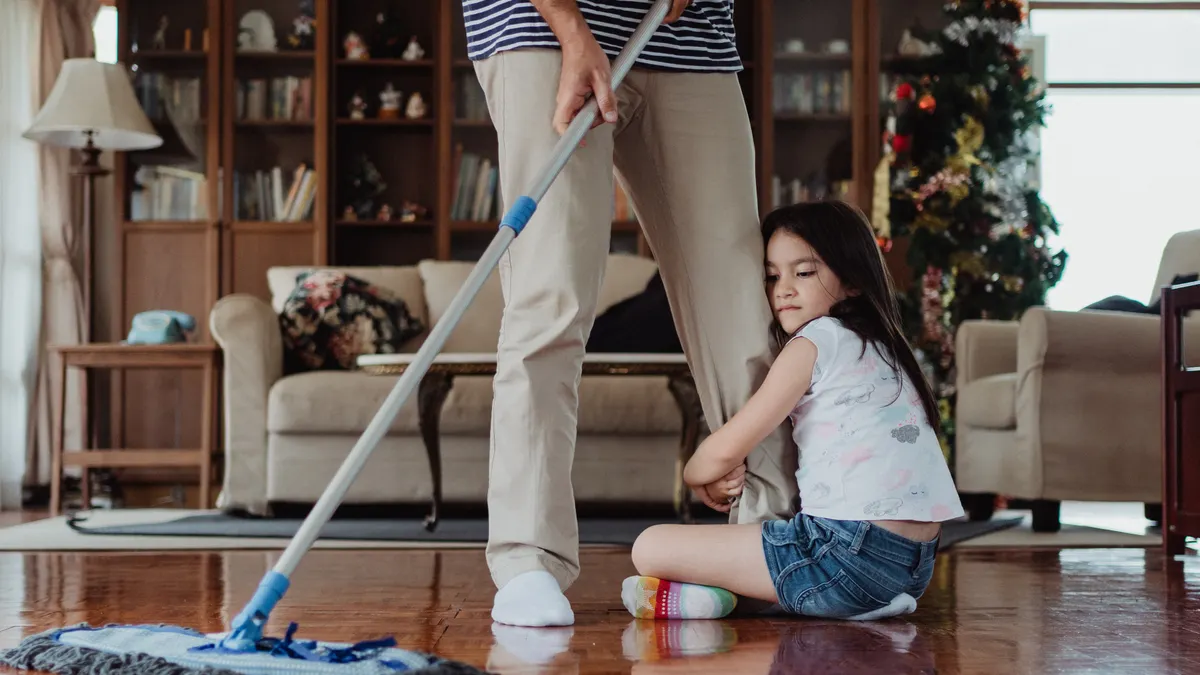
You need a vacuum with a hardwood setting or a soft-brush attachment, a microfiber mop, a bucket, a pH-neutral cleaner made for finished wood, and a dry cloth for spots. Felt pads under chairs and table legs help keep the floor clean between deep passes. A simple toolkit is usually enough, and it keeps the process fast.
A few tools are optional but useful: a second bucket for rinse water, a plastic spray bottle for small areas, and a flat mop head that can be wrung nearly dry. Skip steam mops, wet string mops, and scrub pads. They leave too much water on the surface or abrade the finish. Bona and the NWFA both advise against excess moisture on finished wood.
If you already have a hardwood floor cleaner labeled pH-neutral, check the label for finished wood or hardwood use, then follow the dilution directions exactly. If you are unsure, a simpler cleaner is safer than a stronger one. Strong alkaline cleaners, ammonia, and vinegar are common mistakes because they can dull finish over time.
One more thing belongs on the setup list: felt pads on the bottom of furniture. A set of pads on chair legs and sofa feet costs little compared with the wear pattern they help prevent. Clean floors stay cleaner when grit is not ground into the finish by movement. For more upkeep ideas, see the floor care guide and cleaning tips for high-traffic rooms.
How do I clean hardwood floors without damaging the finish?
Use dry cleaning first, then a barely damp microfiber mop, and keep water off the floor long enough that it does not sit in seams or leave puddles. That is the core method for How to Clean Hardwood Floors Without Damaging the Finish.
-
Clear the floor and remove loose grit. Pick up shoes, pet bowls, toys, and any debris that can drag under the mop. Start with a vacuum on the hardwood setting or a soft-brush attachment, especially along baseboards and under tables. If the vacuum has a beater bar, switch it off. When this step works, the floor looks visibly free of dust, crumbs, and hair, not just “mostly clean.”
-
Dust the floor in one direction with a microfiber mop. Push the mop slowly with overlapping passes so it catches grit instead of pushing it around. Work along the grain if the floor layout makes that easy. A microfiber head traps fine dust that would otherwise act like sandpaper. When it works, the mop head picks up gray film instead of leaving streaks behind.
-
Mix cleaner according to the label in a bucket. Use only the amount the bottle calls for in the bucket, or pour a small amount into a spray bottle if the label allows that method. pH-neutral cleaner is the right default for finished hardwood because it cleans without the harsh residue many all-purpose products leave. The solution should look light, not sudsy or thick. If it foams heavily, it is usually too strong for this job.
-
Dampen, do not soak, the mop. Dip the microfiber mop head into the bucket, then wring it until it feels only slightly moist. It should not drip when you hold it over the bucket for 5 seconds. That is the control point that protects the finish. If a wet trail remains behind the mop, wring it again before continuing.
-
Mop in small sections and dry as you go. Clean a section about 3 to 4 feet square, then move on before the surface has time to stay wet. Rinse or re-dampen the mop when the pad starts to look dirty. The finished section should dry quickly with no standing water, cloudy film, or darker wet patches at the seams. If the floor looks shiny only because it is wet, you used too much liquid.
-
Dry any missed moisture immediately. Use a clean microfiber cloth or towel on seams, corners, and around cabinet bases. Hardwood finishes tolerate brief damp contact far better than standing moisture. The floor is ready for normal use when it feels dry to the touch and no footprints are left behind.
This method is right for most finished hardwood floors and wrong for floors that are waxed, unfinished, or visibly damaged. A waxed floor needs different care, and unfinished wood should not be mopped this way at all.
What kind of cleaner is safe for finished hardwood?
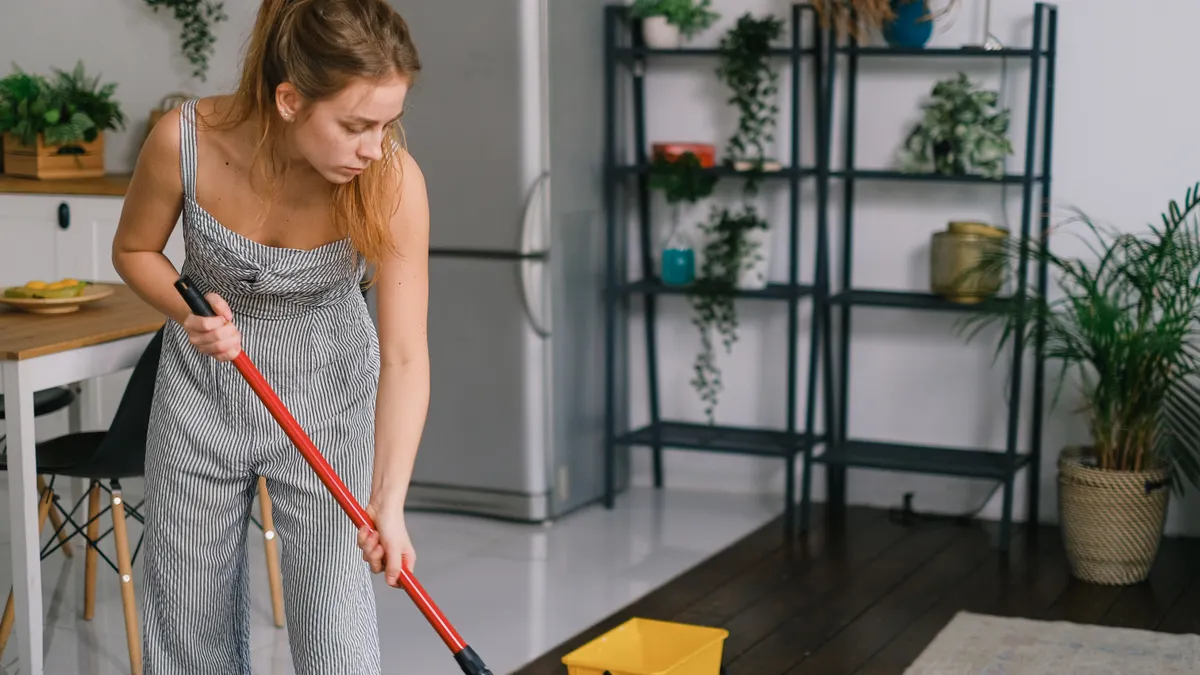
A pH-neutral cleaner labeled for hardwood or finished wood is a good choice for regular cleaning.
That label matters more than the brand name. Hardwood floor finishes are designed to resist normal wear, not repeated exposure to harsh chemistry. A pH-neutral formula helps remove soil without stripping the sheen, leaving a cloudy film, or making the finish feel tacky. If the label says “for sealed hardwood,” “for finished wood,” or “pH-neutral,” that is the language to look for. The Forest Products Laboratory also recommends gentle cleaning products for wood surfaces.
Avoid vinegar as a routine cleaner. It is acidic, and repeated use can dull some finishes even if the floor looks fine at first. Avoid ammonia, bleach, and abrasive powders for the same reason. A product that cuts grease aggressively may be useful in a kitchen on tile, but it is a poor trade on wood.
Plain water is acceptable for a very light spot wipe, but it is not ideal for every cleaning session because water alone does not lift oily residue well. That is where a small amount of proper cleaner helps. The goal is not to polish the floor with chemistry; the goal is to remove the film that attracts new dust. A small bottle of the right cleaner often lasts for many cleanings.
If you prefer to keep the product list short, a single bottle of pH-neutral hardwood cleaner and a bucket are enough for the routine. Anything stronger should be a last resort and only after checking the floor maker’s care instructions. For broader home upkeep principles, the cleaning and maintenance at home hub can sit beside this guide without repeating the same steps.
How much water is too much on hardwood?
Any water that puddles, seeps into seams, or stays visible for more than a few minutes is too much.
Hardwood flooring is vulnerable at edges, joints, and places where the finish is thinner from wear. That is why the mop should be damp, not wet. A good test is simple: after wringing the microfiber mop, press it against the bucket rim. It should release only a few drops, not a steady drip. On the floor, the pass should leave a faint trail that clears quickly.
Do not use a soaking mop, a bucket full of slosh, or a spray that leaves the boards glossy with liquid. One common mistake is washing a section several times “to be thorough.” That adds moisture without improving the result. Another mistake is forgetting that water gathers near baseboards, in dips, and around vents. Those spots often need a towel finish after the mop passes.
If the room has high humidity or the floor is older, be stricter. Older finish can be more porous, and movement at the seams can let water in faster. In a bathroom or kitchen with wood flooring, clean smaller sections so the surface never stays damp for long. The floor should dry fast enough that you can walk across it with socks without leaving dark tracks.
This is the rule that keeps the finish intact: clean with the least water that still moves dirt off the surface. If the floor needs scrubbing to look clean, the problem may be the wrong cleaner, not the amount of elbow grease.
Spot cleaning: how to handle spills, marks, and sticky spots
Blot spills immediately, then wipe the area with a barely damp microfiber cloth and dry it right away.
Spills are less about cleaning power than speed. A dropped drink, cooking oil, or muddy shoe print should not sit while you finish the rest of the room. First, blot with a dry cloth or paper towel. Do not rub; rubbing spreads the spill and presses grit into the finish. Then use a cloth lightly dampened with pH-neutral cleaner or plain water if the label says not to saturate.
For sticky spots, hold the damp cloth on the area for 10 to 15 seconds, then wipe gently. That short pause softens residue without flooding the wood. If the mark is still there, repeat once before reaching for anything harsher. A plastic scraper can lift a gum-like spot, but keep the edge flat and use almost no pressure. Metal tools and abrasive sponges can leave permanent marks in the finish.
Dark scuffs from shoes often come off with a microfiber cloth alone. If they do not, a small amount of hardwood cleaner usually does the job. A stain that does not move after a couple of light attempts may be in the finish itself, not on top of it. At that point, more scrubbing often makes the area look worse, not better.
The practical rule is to escalate slowly. First blot, then wipe, then repeat. Do not jump to harsh chemicals because the spot is stubborn. On wood, stubborn often means deeper, and deeper is where damage starts.
How often should hardwood floors be cleaned and maintained?
Sweep or vacuum 2 to 3 times a week in active areas, mop as needed, and put felt pads and floor mats in place so the floor stays clean longer.
Routine upkeep is what keeps finish-safe cleaning simple. Dust, pet hair, and grit act like fine abrasive paper under foot traffic, especially near entryways and under dining tables. A quick vacuum with the hardwood setting is more useful than a deep scrub after dirt has spread through the room. In homes with kids, pets, or a lot of outdoor traffic, daily dust removal in the busiest rooms is reasonable. The right rhythm can reduce wear before it starts.
Mopping does not need to happen every time you vacuum. Most finished hardwood floors do better with spot cleaning and occasional damp mopping rather than constant wet cleaning. Use the damp mop when the floor has a visible film, prints, or light buildup that vacuuming alone will not remove. Over-mopping can be just as hard on a finish as skipping cleaning altogether.
The rest of the schedule is preventive. Put felt pads under chairs and furniture that moves often. Replace them when they flatten, peel, or collect grit. Use mats at exterior doors, but choose ones that do not trap moisture underneath. If a mat stays wet, it can transfer that moisture to the wood and defeat the point of having it.
The trade-off is clear: less water and fewer cleaning sessions protect the finish, but they require more consistent dust removal. That is the right balance for hardwood. Heavy washing is not a sign of care; controlled maintenance is. For products and routines, compare your floor care checklist with your entryway mat setup.
Common hardwood floor mistakes that damage the finish
The main mistakes are too much water, the wrong cleaner, and cleaning tools that scratch instead of lift dirt.
Using a soaking mop costs you in dullness, swollen seams, and cloudy boards. The fix is a microfiber mop wrung nearly dry. Using vinegar or ammonia costs you in finish wear over time, even if the floor looks fine after one pass. The fix is a pH-neutral cleaner made for finished wood. Using a vacuum with a spinning beater bar can cost you visible scuffs on softer finishes. The fix is the hardwood setting or a soft-brush attachment.
Another common mistake is waiting too long between cleanings. Dirt does not stay on the surface politely; it gets pressed into the finish and becomes harder to remove without scrubbing. That is when people reach for stronger products and create a cycle of damage. A small routine is cheaper than a hard reset.
Do not use steam on hardwood unless the floor manufacturer specifically allows it in writing, and many do not. Steam combines heat and moisture, which is exactly the pair hardwood finishes dislike. That warning matters most on older floors, edge seams, and areas that already show wear.
If the finish is peeling, cupping, or separating at the joints, cleaning will not solve the problem. That is a different repair question. This guide is for keeping a sound hardwood floor clean without making the finish worse.
Can you use vinegar on hardwood floors?
I would not use vinegar as a regular cleaner on hardwood floors. Vinegar is acidic, and repeated use can dull some finishes or leave the surface looking tired. A pH-neutral cleaner made for finished wood is the safer option. If you already used vinegar once, rinse the area lightly with clean water and dry it well.
How often should hardwood floors be cleaned?
Hardwood floors should be dusted or vacuumed 2 to 3 times a week in busy areas, with damp mopping only when the surface needs it. Hallways, kitchens, and entryways often need more attention than guest rooms. The key is not a fixed calendar alone; it is keeping grit off the floor before it gets ground into the finish.
What is the best mop for hardwood floors?
A microfiber mop is a strong general choice for hardwood floors. It picks up fine dust and can be wrung nearly dry, which protects the finish better than a wet string mop. Flat microfiber heads are especially useful because they spread little water and reach under furniture without dragging too much liquid across the boards.
Drafted with AI; not yet reviewed by a person.